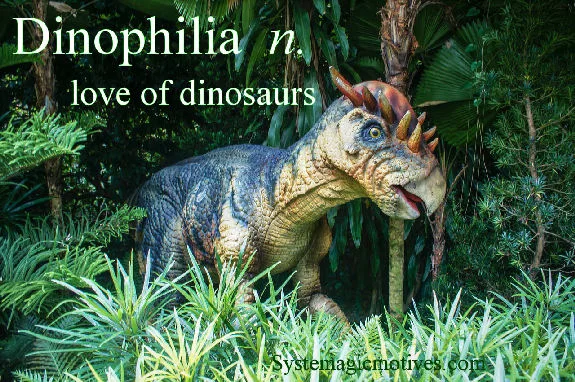
Dinophilia n. A strong interest in or love of dinosaurs.
Dinophilia names a deep affection for dinosaurs and prehistoric life, but in practice it often means much more than fascination with giant bones. People drawn to this subject usually enjoy pattern-finding: comparing skull shapes, sorting species by period, and tracing how environments changed over vast stretches of time. That habit of careful comparison is one reason dinophilia often grows into serious scientific curiosity.
For many learners, dinosaurs become a first doorway into earth science, biology, and critical thinking. A child who starts by memorizing dinosaur names often moves naturally toward geology, fossilization, extinction, and evolution. In that sense, dinophilia is educationally powerful because it turns wonder into method: collecting evidence, asking better questions, and revising ideas when new discoveries appear.
At a cultural level, dinophilia also keeps imagination alive. Dinosaurs sit at the intersection of fact and wonder, where museum work, field science, art, and storytelling meet. The term captures that blend well: a love of deep-time life that invites both disciplined learning and joyful awe.
Some dinosaur fossils preserve pigment structures, helping scientists estimate original feather colors in certain species.
"Extinction is the rule. Survival is the exception."
- Carl Sagan
Dinophilia starts with awe,
at tooth and track and ancient jaw.
From fossil clues in stone and clay,
lost worlds return in thought today.