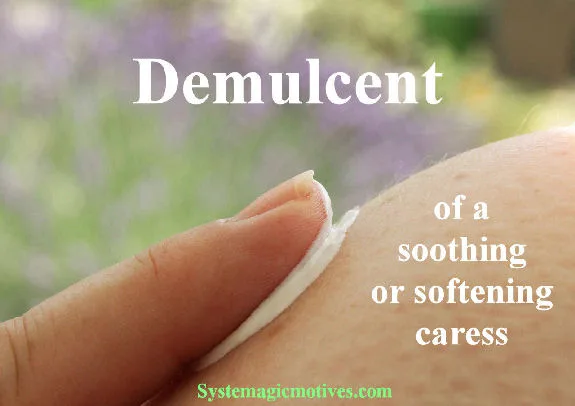
Demulcent adj. Soothing, especially to irritation.
Demulcent describes what softens irritation and restores ease. In medicine, it is often used for substances that coat and calm inflamed tissue, especially in the throat or digestive tract. The core idea is protection through gentleness: creating a buffering layer so healing can proceed without constant abrasion.
The word also works well beyond clinical contexts. A demulcent tone in conversation is one that lowers heat without dismissing truth; a demulcent response can reduce friction while keeping dignity intact. In this broader sense, demulcent language is not evasive. It is steady, tempering roughness so clarity and care can coexist.
Linguistically, demulcent comes from Latin demulcere, "to soothe" or "to stroke gently." That lineage matches its modern force: a small word for a powerful civilizing action, where calm becomes a practical tool for relief, repair, and reconnection.
"Soft words are harder to answer than hard arguments."
- German proverb
Mucilage-rich plants like marshmallow root were historically used as demulcents for throat and digestive irritation.
Demulcent speech can settle restless air,
and ease a crowded hour with patient care;
it does not force the wound to close too fast,
but holds a softer space where peace can last.
Demulcent touch soothes,
calming balm for weary souls,
relief gently spreads.